
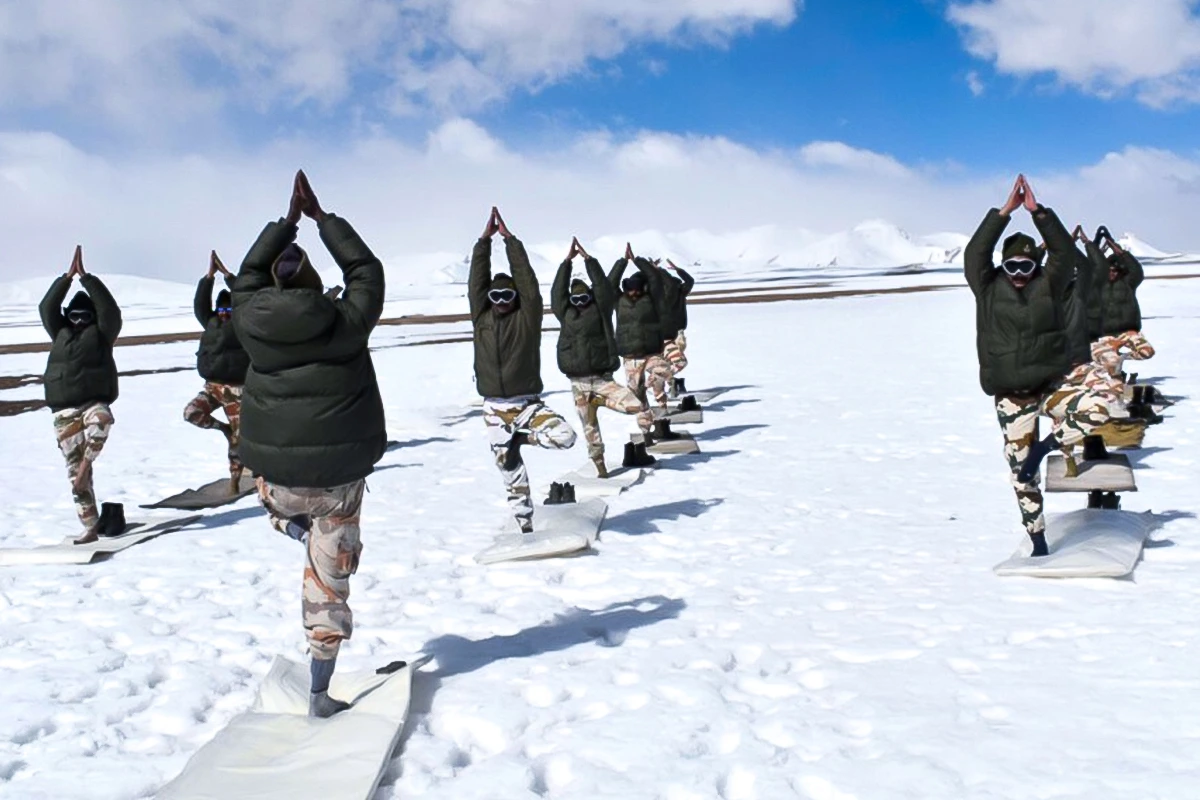
There was significant improvement in the healing of injuries once we adopted Yoga as a way of life in the academy. Even in the icy heights of Siachen Glacier, Yoga has been found to be extremely beneficial… a great stress buster.
–Former Commandant (OTA Chennai)
As the tricolour unfurls against the winter sky this Republic Day, the thunder of the tanks and the precision of the marching contingents at Kartavya Path remind us of the Indian Army’s unmatched physical might. But behind the rugged exterior of our soldiers lies a silent, ancient discipline that is increasingly becoming their “secret weapon” in modern warfare: Yoga.
In recent years, the Indian Army has transitioned from viewing Yoga as a cultural heritage to a core tactical asset. This Republic Day, we explore how the Pranayama and Asanas are being integrated into the lives of the world’s finest mountain warriors.
Tactical Resilience in Extreme Altitudes
From the sub-zero temperatures of the Siachen Glacier to the oxygen-thin ridges of the Himalayas, the Indian Army operates in the world’s most hostile environments.
Yoga is no longer just an “optional” activity; it is a physiological necessity. Soldiers stationed at High Altitude Areas (HAA) utilize specific breathing techniques (Pranayama) to increase lung capacity and blood oxygenation. This practice significantly reduces the risk of High-Altitude Pulmonary Edema (HAPE) and helps the body acclimatize to altitudes where even walking is a challenge.
The Mental Edge: Mindfulness Under Fire
Modern warfare is as much psychological as it is physical. The stress of prolonged deployment and the “fog of war” require a level of mental clarity that few can maintain.
The Army has incorporated Dhyana (Meditation) into the daily routine of combat units. This training helps soldiers:
- Manage Cortisol: Reducing stress levels during long deployments away from home.
- Enhance Focus: Sharpening the “OODA” loop (Observe, Orient, Decide, Act) during high-pressure combat scenarios.
- Post-Deployment Recovery: Aiding in the transition back to civilian life and mitigating the effects of PTSD.
Integrating Heritage with Combat Training
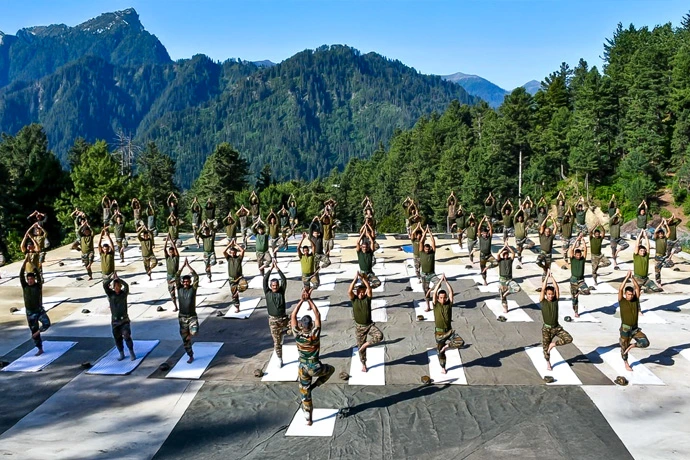
The Indian Army’s approach is a unique blend of “The Old and The New.” It is common now to see soldiers in full combat gear or fatigues performing the Surya Namaskar (Sun Salutation) as part of their morning PT.
By integrating Yoga into the formal training curriculum at centers like the Indian Military Academy (IMA) and the Officers Training Academy (OTA), the force is ensuring that the next generation of leaders is “Holistically Fit.” This isn’t just about flexibility; it’s about core strength, balance, and injury prevention ensuring our soldiers stay on the front lines longer and stronger.
A Global Beacon of Soft Power
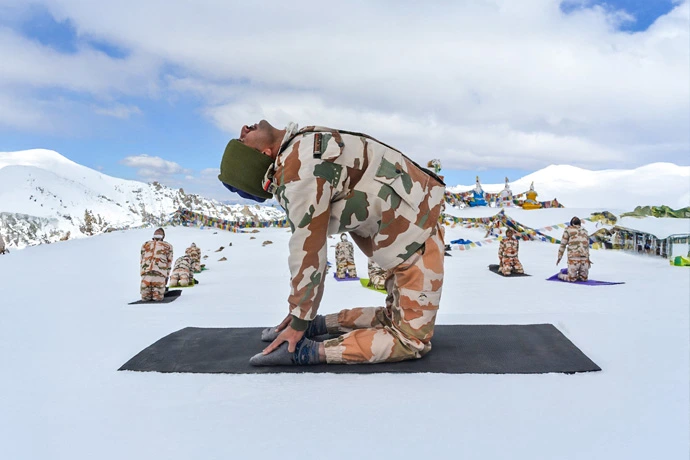
On Republic Day, as we showcase our indigenous weapon systems, the adoption of Yoga stands as a testament to India’s “Soft Power.” International joint exercises (like Yudh Abhyas) often feature Yoga sessions where Indian troops lead foreign counterparts through various routines. It has become a bridge for international military diplomacy, showcasing a soldier who is not just a warrior, but a balanced human being.
Conclusion: The “Yogi-Warrior”
This Republic Day, as we salute the bravery of our martyrs and the vigilance of our sentinels, we recognize the evolution of the Indian soldier. The Yogi-Warrior represents the true spirit of a modern Republic, one that respects its 5,000-year-old roots while standing ready to defend its future with cutting-edge discipline. Indian Army believes in the motto ‘Yoga Karmasu Kaushalam’ (Yoga is excellence in action), and its resolve to incorporate yoga into the daily regimen of personnel.
References / Sources:

